
Saturday, April 4, 2026
  • Home
  • iSPARK-Africa
  • Magazine
  • Concierge
0.00$ 0 Cart

My Account

Home»Opinion»Harry ‘Tomi Davies: “Startups push boundaries and drive future growth, while SMEs ensure economic stability and sustainability. Together, they contribute to innovation, job creation, and economic resilience”
Opinion

Harry ‘Tomi Davies: “Startups push boundaries and drive future growth, while SMEs ensure economic stability and sustainability. Together, they contribute to innovation, job creation, and economic resilience”

AdminBy AdminOctober 12, 2024Updated:October 12, 2024No Comments3 Mins Read
Facebook Twitter Pinterest LinkedIn Tumblr Email
Share
Facebook Twitter LinkedIn Pinterest Email
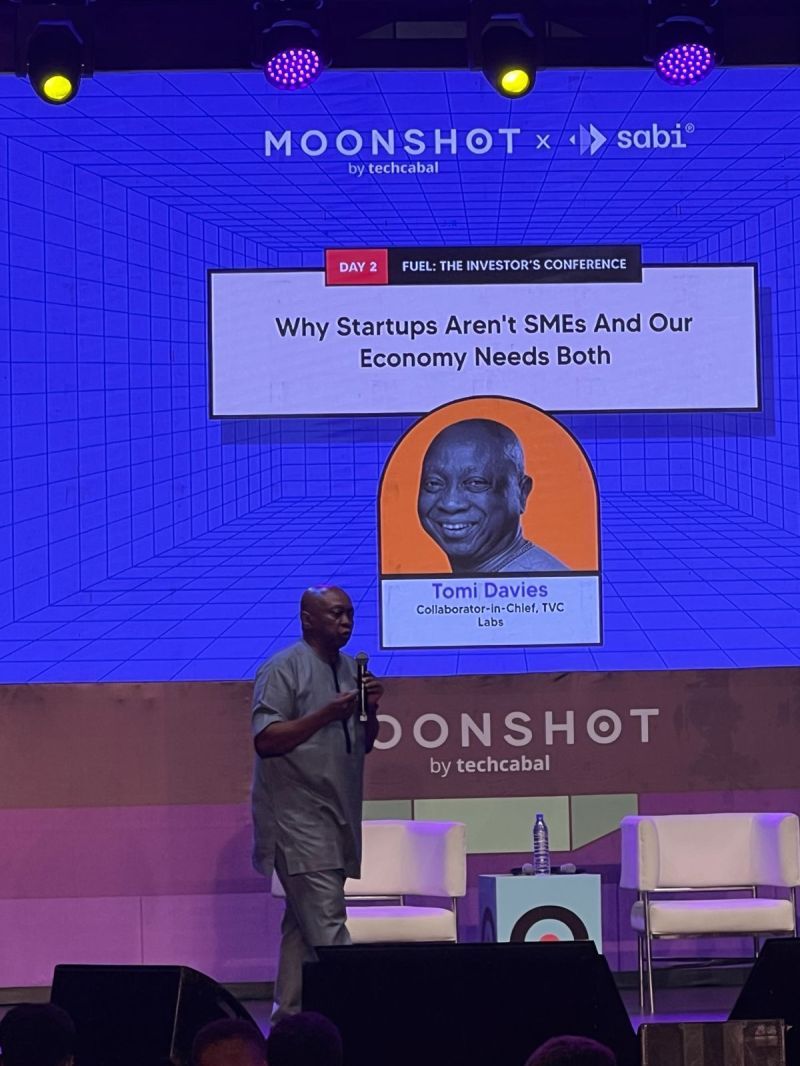
Harry ‘Tomi Davies (co-founder of the Lagos Angel Network & President of the African Business Angel Network) speaks at Moonshot by TechCabal 2024

Systems Analyst turned Public Speaker, Tech Strategy Advisor and Angel Investor, Harry ‘Tomi Davies is Collaborator-in-Chief at TechnoVision, co-founder of the Lagos Angel Network (LAN) and President of the African Business Angel Network (ABAN).

Davies recently spoke in the main arena at Moonshot by TechCabal 2024 – a conference that brings together Africa’s tech ecosystem – about the difference between Startups and SMEs (Small and Medium Enterprise) and why both matter to an economy. Here is a summary of his speech:
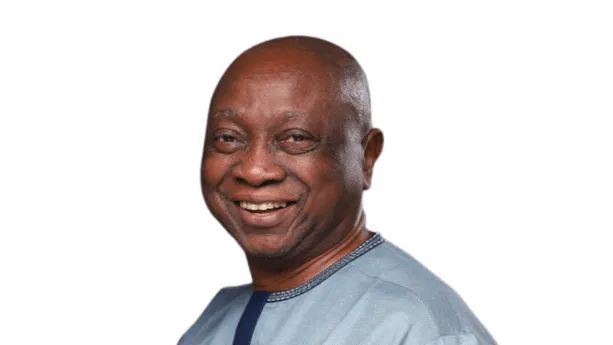

Angel Investor, Harry ‘Tomi Davies

For me, the first key differentiator is that Startups are designed to scale fast and so target exponential growth. They are focused on disruptive innovation that enables them enter large markets quickly by optimising their business models for that growth. This growth mindset makes them attractive to angel investors and venture capitalists. SMEs on the other hand aim to build sustainable, profitable businesses over time, usually serving local or regional markets with a stable customer base. Their focus is on steady, incremental growth funded through traditional financing methods like bank loans.

The second key difference between them is the associated innovation risks. As startups are usually experimenting with new technologies, business models, or markets that either result in rapid success or failure they are extremely high-risk ventures. Compared to startups, as they usually operate in established markets with proven business models. They innovate at a slower pace and focus more on consistency and long-term sustainability rather than disruption.

Lastly, SMEs typically have a well-defined and proven business model from the outset. They focus on offering established products or services to a stable customer base and aim for profitability from the early stages. Startups meanwhile begin with an unproven business model, which they refine through rapid iteration and customer feedback. They are typically focused on solving specific problems in ways that haven’t been addressed before, with the end goal of creating a scalable, repeatable business model.

So why does any economic ecosystem need both?

Well, SMEs are the backbone of economies, providing stability, local employment, and contributing significantly to GDP. They serve as long-term economic stabilizers, providing essential goods and services in traditional industries like
retail, manufacturing, and agriculture.

Startups complementarily drive innovation and disruption, creating new markets and technologies that transforms industries and enhance a country’s global competitiveness. They often are magnets for attracting external investment and create high-value jobs in sectors like education, finance, energy, healthcare, agriculture and others.

So as you can see both startups and SMEs play critical roles in fostering a balanced economic ecosystem: startups push boundaries and drive future growth, while SMEs ensure economic stability and sustainability. Together, they contribute to innovation, job creation, and economic resilience.

Share. Facebook Twitter Pinterest LinkedIn Tumblr Email

MOST READ POSTS

Mayowa Olugbile: “Africa’s approach to AI does not need to replicate the strategies of the US, China, or Europe. The continent’s strength lies in applying AI to immediate, high-impact challenges—optimizing smallholder farm yields, extending healthcare to underserved communities, and improving local infrastructure and logistics”

October 6, 2025

Adebayo Ajibade tells how, at the latest Loubby AI Automation Bootcamp, more than 3,000 emerging talents began mastering the tools that power today’s digital economy. In just weeks, these learners have built solutions that rival global startups

September 26, 2025

Adesuwa Okunbo Rhodes: “I’ve lost count of the number of times I’ve heard women being told to “find a mentor” or “build their network.” Those things matter; they can open doors, build confidence, and spark ideas. But let’s be honest: without capital, dreams stay as dreams”

September 20, 2025

Leave A Reply Cancel Reply


The reCAPTCHA verification period has expired. Please reload the page.

In the News

Africa’s investment landscape is evolving fast — driven by bold thinkers, global bridge-builders, and new-generation fund managers who see opportunity where others see risk. From venture capital to private equity, climate infrastructure to fintech, these individuals are shaping the flow of capital into the continent’s most dynamic sectors

Innovation hubs: Nominate your top startups!

Apply: Africa Climate Accelerator by Impact Hub Lagos

Paga officially launches in the U.S., offering Diaspora Africans seamless cross-border payments, simplified transfers to family and businesses back home

Moniepoint, one of Africa’s fastest-growing fintech companies, breaks into the UK market, and earns spot among leading fintechs, What this development means for its users

Mayowa Olugbile: “Africa’s approach to AI does not need to replicate the strategies of the US, China, or Europe. The continent’s strength lies in applying AI to immediate, high-impact challenges—optimizing smallholder farm yields, extending healthcare to underserved communities, and improving local infrastructure and logistics”

Adebayo Ajibade tells how, at the latest Loubby AI Automation Bootcamp, more than 3,000 emerging talents began mastering the tools that power today’s digital economy. In just weeks, these learners have built solutions that rival global startups

ABAN Congress 2025 heads to Lagos

GIZ-SAIS Investment Readiness Program 2026

2025-2026 fully funded scholarships (undergrad, Master’s, Ph. D) – no application fees, IELTS/ TOEFL required

COMPANY

  • About B&E
  • MoJo4TheMasses
  • Contact Us
  • Magazine
Instagram Linkedin
© 2023 Bank & Entrepreneur
  • Privacy Policy
  • Terms of Use

Type above and press Enter to search. Press Esc to cancel.